Your dog pants when you leave. Paces at night. Whines at closed doors. You've tried crate training, more exercise, even calming treats. But the anxiety persists.
What if the solution isn't more training or medication—but where your dog sleeps?
The Hidden Cause of Canine Restlessness
Separation anxiety is the #1 behavioral issue vets report in dogs. It stems from a primal need: security and enclosure. When a dog feels exposed—sleeping on a flat mat in an open room—they can't fully relax. Their nervous system stays on alert.
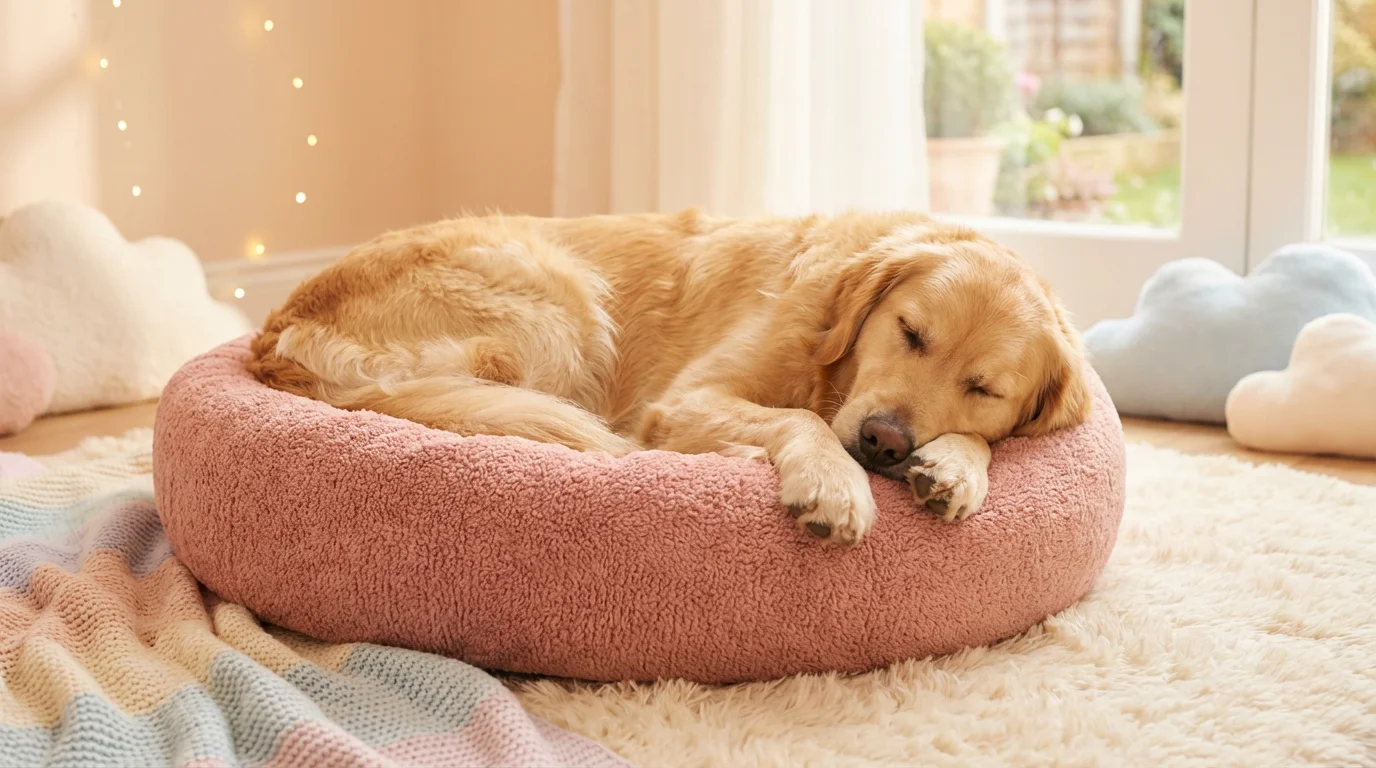
How "Calming Beds" Actually Work
The science behind donut-style beds is rooted in thermoregulation and deep pressure therapy—the same principle behind weighted blankets for humans.
🧠 The Science:
- Raised Rim: Creates a "nest" boundary that mimics a mother's protective embrace, triggering safety instincts
- Plush Filling: Air-support foam adapts to body shape, reducing joint pressure points
- Soft Texture: Mimics fur warmth, lowering cortisol (stress hormone) levels
- Self-Warming Material: Reflects body heat back, creating cozy warmth without electricity
The PawHaven™ Macaron Calming Bed
Designed specifically for anxious pets, this bed combines all the science-backed features in one beautiful package:
- ✅ Raised bolster rim for head and neck support
- ✅ Ultra-soft plush surface that feels like a mother's coat
- ✅ Non-slip bottom for stability on any floor
- ✅ Machine washable for easy hygiene
- ✅ Multiple sizes from XS to XL
Signs Your Dog Needs a Calming Bed
- Curls up in tight corners or under furniture
- Pants or trembles when alone
- Chews furniture or paws at doors
- Follows you room-to-room obsessively
- Senior dogs with joint pain or arthritis
It's More Than Just Comfort
Restorative sleep affects everything: behavior, digestion, immune function, lifespan. A dog that sleeps 8+ hours in true relaxation is a healthier, happier dog.